Water Damage Restoration
How a wet house gets from first call to dry, repaired rooms, and which page to read for your kind of water.
Stone walls that weep after a wet week, cast-iron drains that back up in a downpour, a supply line that splits in an exterior wall in January. Call (833) 490-5225 at any hour. A crew is dispatched as fast as one is available, and the emergency-stage price is explained before any equipment runs.
Fastest: call (833) 490-5225. Or send this and we call you back.
Hard freezes in January and February, snowmelt and spring rain on saturated ground, summer thunderstorms and the tropical remnants of late August and September decide which water problems are most likely in Jenkintown from week to week.
Jenkintown Water Damage Restoration takes water damage calls 24/7 for Jenkintown, the rest of Montgomery County, Philadelphia neighborhoods and Camden, NJ. A technician pumps out standing water, checks walls and floors with moisture meters and a thermal camera, and sets air movers and dehumidifiers. You approve the emergency-stage price first, and a licensed plumber handles the pipe repair.
Safety comes first. Close the main shut-off, which in many older houses here sits on the cellar wall where the supply line comes through the foundation, and keep everyone out of standing water that touches outlets, cords or the furnace. Switch off power to the wet area only if the panel is dry and easy to reach, and treat any water that came up a drain or in from a creek as contaminated.
A wet cellar is the ordinary job in this part of Montgomery County, not the unusual one. The housing is old, the walls are often stone or brick, and the ground around them stays damp for days after a storm. Start with a flooded cellar or a sewer backup, check the estimated prices, or read the winter pipe guide if the freeze is what you are worried about.
Pick a service for symptoms, process and typical cost, or call and describe what you hear and see.
How a wet house gets from first call to dry, repaired rooms, and which page to read for your kind of water.
Pumping and extracting standing water from cellars, floors and carpet so drying can start before mold does.
Water removal and drying after a supply line bursts, with the pipe repair left to a licensed plumber.
Cleanup and drying after a frozen pipe thaws and leaks, with pipe repair left to a licensed plumber.
Pumping, cleanup and drying when water arrives in a basement from the surface, a failed pump or a backed-up drain.
Cleanup and drying for older cellars where water weeps through the face of rubble stone walls rather than through a crack.
Cleanup and drying after a sump pump fails, with the pump itself repaired or replaced by a plumber or pump contractor.
Cleanup and drying after creek, river or storm surface water, treated as contaminated from the start.
Removal, cleaning and drying after sewage or a sewer backup reaches a basement, handled as Category 3 contamination.
How mold is removed after water damage, what Pennsylvania law does and does not require, and what to ask any company.
What a mold inspection includes, what air and surface tests do, and how to vet an inspector in a state with no mold license.
Monitored drying of plaster-and-lath walls, hardwood over joists and stone or brick, with daily readings until dry.
Interior water cleanup and drying after storms, plus emergency tarping or board-up, not roof replacement.
Drying and cleanup when water reaches a ceiling, including old plaster-over-lath ceilings that sag and fall.
Extraction and drying after a tank water heater leaks across a cellar floor; a licensed plumber replaces the tank.
Drying and cleanup after a washer hose, dishwasher line or refrigerator supply leak reaches floors and the ceiling below.
Interior drying and cleanup, plus emergency tarping, after snowmelt backs up under shingles and into a ceiling.
Water cleanup in attached houses where party walls, shared drains and narrow stairs change how the work is done.
Water removal and drying for storefronts, offices and multi-unit buildings, quoted after a walkthrough.
Pipes split on the coldest nights and sump pumps quit in the middle of the storm, so the phone is picked up around the clock. A crew is sent as soon as one is free, and you hear an honest read on the wait instead of a promise.
The call goes to the closest crew that has room, so the drive usually starts somewhere along the York Road corridor or the neighborhoods nearby, not across the region.
Extraction and drying setup are explained and approved before anything is switched on. Plaster, drywall, trim and paint come later as their own quote, once the walls and floors have dried.
Moisture meters and a thermal camera find water inside plaster, behind cellar paneling and under floor boards. Readings are written down at each visit, and equipment goes home when the materials test dry.
You can have the photos and moisture logs to send to your insurance company. Coverage is decided by your insurer under your own policy, and flood and sewer backup are often handled differently from a burst pipe, so ask early.
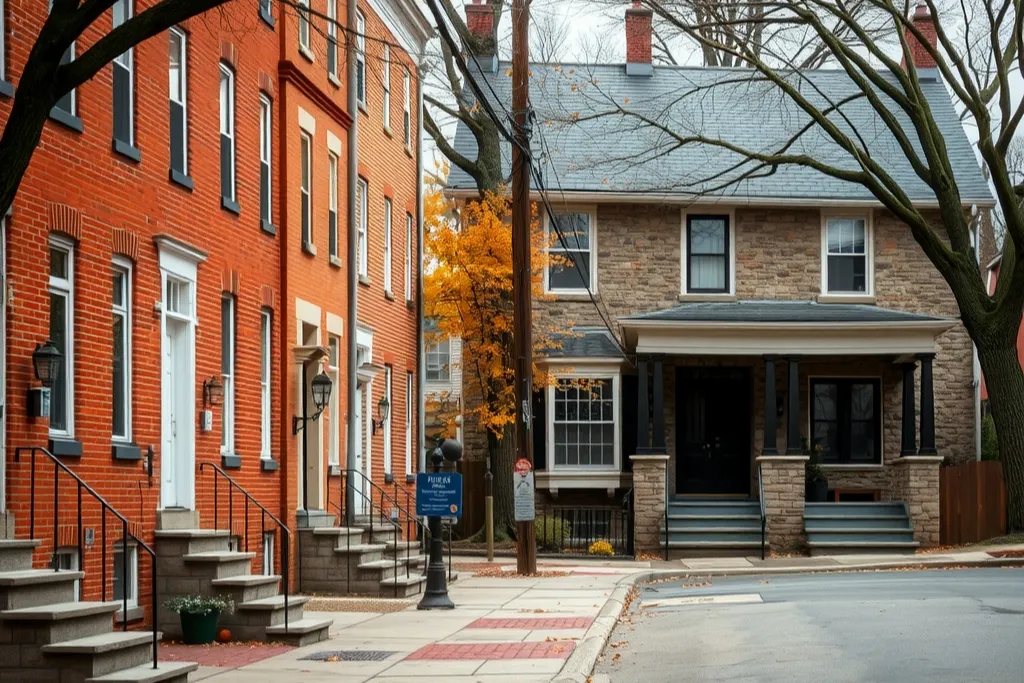
Stone twins, brick rowhouses, narrow cellar stairs and plaster over lath are the normal setting. The crew plans for tight halls, slow-drying walls and a neighbor on the other side of the wall.
Shut off the main, stay clear of water near outlets and ring the number at the top of the page. Say where the water came from, which floors are wet and how long it has been running.
The nearest available crew is dispatched and phones ahead. While you wait, photograph every wet room and lift small valuables off the floor before anything else moves.
On arrival the crew maps the wet area, explains the emergency-stage price and starts extraction once you agree. Anything that has to come out, such as plaster or a section of floor, is discussed first.
Air movers and dehumidifiers run while readings are taken on each visit. Stone, brick and plaster can need longer than a modern wall. Repairs are quoted after the dry goal is met, and a plumber fixes the broken line.
Close the main shut-off, then keep people and pets out of standing water that touches outlets, cords or the furnace. Cut power to the wet area only if the panel is dry and easy to reach. Next, photograph the damage, lift valuables off wet floors and call so a crew can start pumping and drying.
Find the shut-off before you need it. In a rowhouse or twin it is often near the front cellar wall, close to the meter; every house is different, so look now and check that the handle actually turns. A tank water heater has its own cold-water valve on top, and toilets, washers and sinks each have a small valve nearby.
Many houses near Jenkintown are old enough to have a full cellar under stone or brick walls, and a cellar is the lowest place any water can reach. Rain from above, groundwater through the walls and drains from below all end up there. Twins and rowhouses add shared walls and old cast-iron drains, so ordinary storms become wet-cellar calls.
Jenkintown sits in the Tookany/Tacony-Frankford watershed, and WHYY reports that the Jenkintown Creek drainage is about 98% developed. Rain that once soaked into the ground runs off roofs and pavement and arrives at the creek quickly, and the area's normal rainfall is about 44 inches a year. A cellar built a century ago, long before most of that paving, takes the consequences.
Where the damage starts depends on the building. A twin may take water through a stone wall or from the other half of the house, a rowhouse often takes it down a drain or across a party wall, and a postwar house with a sump pump takes it the moment the pump stops. The stone and brick basement page and the rowhouse and twin page go through those cases one at a time.
Each season brings its own failure. December through February splits pipes and builds ice dams, March and April bring snowmelt and rain on soaked ground, June through September brings thunderstorms and tropical remnants, and October's leaf-clogged gutters set up the next freeze. The EPA still advises drying wet materials within 24 to 48 hours to head off mold.
Treat the table as a rough guide rather than a forecast. A mild winter shifts it one way and a stormy August shifts it the other, so watch the National Weather Service Mount Holly freeze and flash flood warnings for this area.
| Months | Common water trouble | Worth doing now |
|---|---|---|
| Dec–Feb | Pipes freezing in exterior walls, vestibules and unheated cellars; ice dams on older roofs; leaks found after holiday trips | Keep the heat on when you are away; open cabinet doors on outside walls; know where the main is |
| Mar–May | Snowmelt and rain on frozen or soaked ground, seepage through stone walls, sump pumps running hard, creeks rising | Test the sump pump; point downspouts away from the wall; check window wells |
| Jun–Sep | Short, heavy thunderstorms and tropical remnants; flooded window wells; storm drains clogged with debris | Clear gutters and drains; keep valuables off the cellar floor |
| Oct–Nov | Leaf-clogged gutters, first hard freezes, furnace season in closed-up houses | Clean gutters; unhook garden hoses; shut off outside spigots |
The EPA advises drying water-damaged materials within 24 to 48 hours to prevent mold growth, so the first day matters. That is a reason to start extraction promptly, not to panic. Dense materials such as plaster, brick and old floor boards dry slowly, which is why readings, not the calendar, decide when the equipment leaves.
Mold can trigger allergy and asthma symptoms in some people, and a closed, damp cellar in a humid summer is where it tends to start. A small, clean spill on a bare floor may dry on its own with a window open. Anything that soaked into plaster, paneling, carpet or stored cardboard deserves a meter reading before you decide it is dry.
If the water was sewage or came from a creek, the situation is different: porous materials it touched usually have to come out rather than dry in place. Our flood damage cleanup page explains why.
Cost guides for Philadelphia report a typical restoration job at $1,597–$5,456, and flooded basement cleanup at $2,000–$7,000. Working estimates for the emergency stage: moisture assessment free–$200, extraction $1.00–$3.50 per square foot, drying one room $800–$2,500. You approve that price before work starts; repairs are quoted after drying.
Several things move the total: how much area got wet, whether the water was clean, gray or sewage, what the surfaces are made of, how long the water sat and how many drying days it takes. The working estimates are our own planning ranges, confirmed on site, and the reported figures come from public cost guides, not from a quote. Every line is on the price page.
ZIP 19102, 19103, 19106, 19107, 19123, 19130
ZIP 19121, 19132, 19133, 19140, 19141, 19120…
ZIP 19134, 19125, 19122, 19137, 19124, 19135
ZIP 19104, 19131, 19139, 19143, 19151, 19142…
ZIP 19145, 19146, 19147, 19148, 19112
ZIP 19144, 19138
ZIP 19119, 19150
ZIP 19118
ZIP 19127, 19128, 19129
ZIP 08102, 08103, 08104, 08105
ZIP 19111, 19149
ZIP 19115, 19152, 19154
ZIP 19116, 19114, 19136
ZIP 19001
ZIP 19012
ZIP 19027
ZIP 19095
ZIP 19038
ZIP 19006, 19009
ZIP 19090
ZIP 19040
ZIP 19044
ZIP 19034, 19025
ZIP 19031, 19075
ZIP 19002
ZIP 19446
ZIP 19401, 19403
ZIP 19041
ZIP 19020
ZIP 18974
Jenkintown, PA 19046 · 25 km service radiusCall (833) 490-5225
We also cover many smaller communities across Montgomery County. Check your ZIP.


If it's an emergency, call now. For non-urgent water damage restoration, send the form and we'll call you back.
Cost guides report a typical water damage restoration job at $1,383 to $6,369 nationally (HomeAdvisor, average about $3,868) and $1,597 to $5,456 for Philadelphia (Angi, average about $3,527).
Pipes freeze first where cold reaches them: unheated cellars, crawl spaces under additions, exterior stone or brick walls and vacant houses.
It depends on the cause and on your own policy, and only your insurer can say.
The phone is answered 24/7, holidays included, and a crew is dispatched as fast as one is available. An after-hours, weekend or holiday emergency fee is estimated at $100–$300, and you hear about it before the work begins.
No. Pipe and water heater repairs go to a licensed plumber. The crew helps you find and close the right valve, then handles extraction, drying and cleanup. Calling a plumber and the restoration line at the same time keeps both jobs moving.
A small, clean spill on a bare concrete floor, perhaps. Plaster, wood trim, carpet and the base of a stone wall hold water that household fans never reach, and a cellar with closed windows traps the moisture you lift. A meter tells you whether it is dry; a fan cannot.
It depends on your policy, so ask your agent. Sudden and accidental damage such as a burst pipe is often covered, while flood needs a separate policy that takes 30 days to start, and sewer or sump backup usually needs an endorsement. The crew can give you photos and readings; your insurer decides coverage.
Jenkintown and 30 communities within about 25 km, including Abington, Cheltenham, Elkins Park, Glenside and Willow Grove in Montgomery County, Germantown, Chestnut Hill, Fox Chase and Kensington in Philadelphia, and Camden, NJ. The service area list has a page for each.
Not always, but it means moisture is getting in. Damp stone, soil gaps and a wet floor drain can all smell musty without visible growth. If the smell comes with stains, peeling paint or fuzzy patches, a mold inspection can map where the moisture is going.